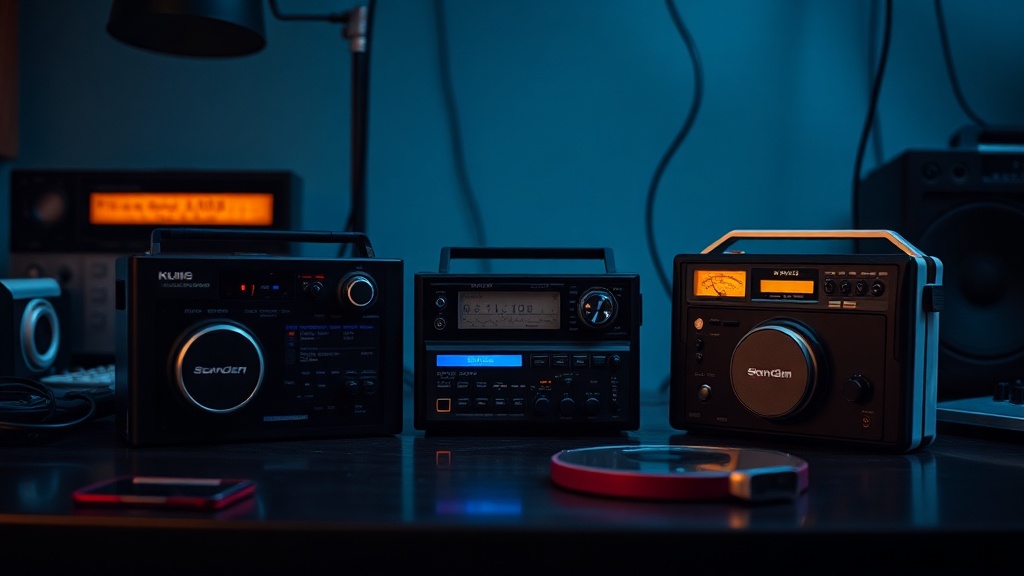
Hidden Gems of the 90s: Budget Friendly Walkmans for Modern Audiophiles

The Reliable Sony Sports Series
The Lightweight Discman Hybrids
The Robust Panasonic Quintet
The smell of aging plastic and the mechanical clunk of a heavy play button defines the peak of the 1990s portable audio era. While many high-end collectors obsess over the heavy metal Sony WM-D6C or the legendary Discman models, there is a massive, overlooked middle ground. This post looks at the budget-friendly, high-performance cassette players from the 90s that offer incredible sound quality without the collector-grade price tag. We're focusing on the players that own the "sweet spot" of the market—devices that are reliable, easy to find, and sound remarkably clean on a modern pair of headphones.
Why are 90s Walkmans better for casual listening?
90s-era portable cassette players often feature improved electronic circuitry and more efficient motor control compared to the more primitive 80s models. By the mid-90s, manufacturers like Sony, Panasonic, and Aiwa had perfected the art of the compact, high-fidelity portable player. These devices are generally lighter and more durable, making them perfect for daily use rather than just sitting on a shelf. You get a balance of portability and high-fidelity playback that doesn't require a specialized technician to maintain.
One thing to keep in mind is that while these aren't "audiophile" grade in the sense of a high-end home deck, they are incredibly capable. If you use a decent pair of wired headphones, the separation and clarity on a well-maintained 90s Sony or Panasonic unit will blow you away. It's much more about the soul of the music than just the raw specs.
If you are just starting out, you might want to check out my guide on spotting gems vs junk to ensure you don't end up with a plastic paperweight.
What are the best budget-friendly Walkman models?
The best budget-friendly models are the mid-tier Sony Walkman series and the high-end Aiwa players from the late 90s. These brands dominated the market, and their "standard" consumer models often outperform the "premium" models of cheaper brands. You aren't just buying a name; you're buying decades of engineering refinement.
Here is a breakdown of the specific models that offer the best value for your money right now:
- Sony Walkman NW-series (Cassette versions): While Sony is famous for the digital era, their late-era analog players are incredibly sturdy and have a very consistent wow and flutter rate.
- Aiwa HS-Series: Aiwa was the king of the "affordable luxury" segment. Their players often have much better bass response and a warmer sound profile than the standard Sony models.
- Panasonic RX-Series: These are often overlooked by collectors, but they are absolute workhorses. They are built like tanks and are perfect for someone who actually wants to use their player on a commute.
- Toshiba Type-S: These are the true "hidden gems." They are often found in thrift stores for a handful of dollars, yet they possess a surprisingly clean signal path.
I've put together a comparison to help you decide which direction to head in based on your specific needs.
| Model Type | Primary Strength | Best For | Typical Sound Profile |
|---|---|---|---|
| Sony (Mid-tier) | Durability & Reliability | Daily Commuting | Neutral/Clean |
| Aiwa (High-end) | Bass & Warmth | Casual Listening | Warm/Rich |
| Panasonic (Standard) | Build Quality | Outdoor Use | Bright/Crisp |
| Toshiba (Budget) | Value-to-Price | Beginners | Balanced |
A quick note on maintenance: even a great machine will fail if you don't treat it right. If you've found a great deal but it's been sitting in a damp basement, you should read about protecting your vintage Walkman from humidity and corrosion before you even hit play.
How much should you spend on a 90s cassette player?
A decent 90s-era portable cassette player should cost anywhere from $30 to $80 USD depending on the brand and condition. If you see a "premium" model going for $200, you are likely paying a collector's premium rather than a functional value. For the price of a single high-end modern headphone, you can own a fleet of these vintage gems.
It's easy to get carried away in the auctions on eBay. I see people bidding way too much on models that are essentially just "fashionable" rather than "high-quality." The goal is to find a player that sounds great and actually works. A $40 Aiwa that has been well-maintained will sound better than a $150 Sony that has been abused. The history of these devices is documented well on sites like Wikipedia, so you can always research the specific technical specs before you buy.
Don't forget to factor in the cost of the batteries. A lot of people buy a great player and then complain about the sound, not realizing that cheap, low-voltage batteries are the culprit. I actually wrote a piece on choosing the right batteries for maximum playback time which is a must-read for anyone looking to get the most out of their gear.
The "Hidden" Specs You Need to Look For
When you're browsing through local shops or online listings, don't just look at the brand name. Look at the technical descriptions. If a seller mentions "Low Wow and Flutter," that's a good sign. It means the playback speed is stable and your music won't sound like it's warping. If they mention "Auto-Reverse," that's a massive bonus for long listening sessions. It saves you from having to manually flip the tape, which is a hassle we all want to avoid.
Another thing—watch out for the "battery leakage" issue. Many 90s players have had batteries left inside for years, causing corrosion on the terminals. If the metal looks green or crusty, walk away. It's a much harder fix than most people realize. A clean terminal is worth its weight in gold.
There's a certain magic to the 90s era of audio. It was the final flourish of analog before digital took over everything. These players represent a time when portability didn't mean sacrificing the richness of the music. You're not just buying a piece of plastic; you're buying a way to experience your collection with a different kind of texture.
If you're looking to build a library for these machines, you'll eventually need a system for your tapes. I've spent a lot of time on organizing my vintage cassette collection, and it really changes how you interact with your music. It turns a hobby into a lifestyle.
Keep hunting for those oddities. The best deals are rarely in the "featured" section of the big auction sites. They're in the dusty bins of local shops and the unlisted items of small-scale sellers. That's where the real value lives.