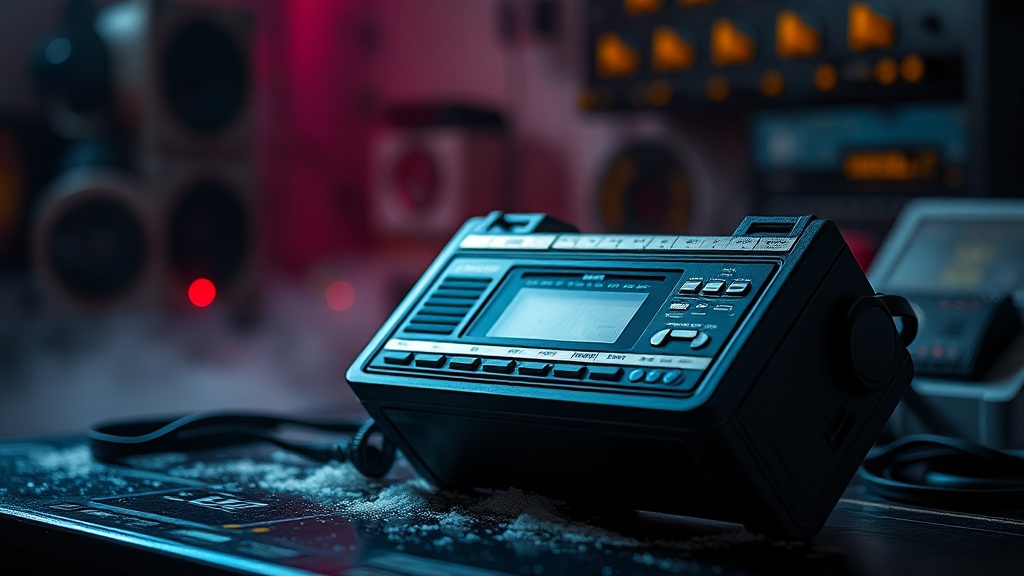
Protecting Your Vintage Walkman from Humidity and Corrosion

Many collectors believe that a sealed plastic case is enough to protect their gear from the elements. It isn't. While a hard case keeps dust out, it does nothing to stop moisture-induced corrosion or the slow degradation of internal components caused by high humidity. This post covers how to manage ambient moisture, prevent battery leakage, and maintain the structural integrity of your vintage Sony, Panasonic, or Aiwa players through various environmental conditions.
Humidity is the silent killer of vintage electronics. It attacks the delicate copper traces on circuit boards and turns the internal mechanisms of a cassette deck into a sticky, non-functional mess. If you don't manage it, you're just waiting for the inevitable failure of a capacitor or a corroded motor.
How Does Humidity Affect Vintage Walkmans?
High humidity levels cause rapid oxidation of metal contacts and can lead to fungal growth on internal optical components or even the magnetic tape itself. When moisture levels in the air rise, it seeks out any path into your device—often through the battery compartment or the headphone jack.
The real danger is the "micro-environment" created inside a closed storage box. If you put a Walkman into a plastic bin with a bit of moisture trapped inside, that moisture has nowhere to go. It settles on the metal-to-metal connections. This leads to:
- Contact Oxidation: The gold or nickel plating on switches and potentiometers develops a layer of grime that kills signal transmission.
- Battery Leakage: High humidity often correlates with temperature swings, which can cause batteries to leak alkaline fluid more aggressively.
- Tape Degradation: Humidity doesn't just hit the machine; it hits your cassettes. Damp tape becomes "sticky," leading to playback issues and head clogs.
If you've ever heard a scratchy sound when turning the volume knob, you're likely hearing the result of oxidation. It's a sign that the internal components are struggling against the environment. To understand the science behind how moisture interacts with metals, you can check the principles of oxidation on Wikipedia.
It's a slow process, but once it starts, it's hard to reverse without significant technical skill. (And trust me, you don't want to be the person trying to de-oxidize a surface-mount component with a toothpick.)
What Is the Best Way to Store Vintage Audio Gear?
The best way to store your collection is in a temperature-controlled, low-humidity environment using desiccant packs to actively pull moisture from the air. You shouldn't just throw your gear in a closet and hope for the best.
A common mistake is using way too many silica gel packets in a small, airtight container. While silica is great, if the packet becomes saturated, it can no longer protect your gear. You need to use rechargeable desiccant canisters or high-quality silica gel that can be "re-baked" to remain effective.
Here is a breakdown of storage methods and their effectiveness:
| Storage Method | Pros | Cons |
|---|---|---|
| Airtight Plastic Bin | Keeps dust out perfectly. | Can trap moisture inside if not used with desiccant. |
| Open Shelf Display | Looks great for collectors. | High risk of dust and rapid humidity changes. |
| Dedicated Electronic Cabinet | Stable temperature and humidity. | Expensive and requires space. |
I highly recommend using a dedicated dehumidifier in your storage room if you live in a damp climate. If you are based in a coastal area or a place with heavy seasonal shifts, a standard closet isn't enough. You might want to look into EPA guidelines on indoor air quality to understand how moisture affects your home environment. A little bit of proactive control goes a long way.
One thing to remember: never store your Walkmans in a basement. Basements are notorious for high humidity and temperature fluctuations. That’s a recipe for a dead Sony WM-D6C.
How Can I Prevent Battery Leakage and Corrosion?
The most effective way to prevent battery-related damage is to remove all batteries from the device before any period of long-term storage. Even "dead" batteries can leak alkaline paste, which is highly corrosive and will destroy the contact springs and the motherboard.
If you're a collector who keeps a lot of gear ready for immediate use, you'll need to be even more vigilant. Even the best alkaline batteries from brands like Duracell or Energizer can fail if left in a device for months. If you find a battery has already leaked, don't panic. You'll need to neutralize the acid.
When dealing with a leak, follow these steps:
- Remove the batteries immediately: Use gloves to avoid skin contact with the alkaline paste.
- Neutralize the acid: Use a small amount of white vinegar or a specialized electronic cleaner to neutralize the alkaline residue.
- Clean the contacts: Once the acid is neutralized, use a cotton swab and high-percentage Isopropyl Alcohol (90% or higher) to clean the terminals.
- Inspect for damage: Check if the spring tension is still intact or if the metal has been eaten away.
If you're currently in the middle of a restoration, you might find my previous guide on how to clean and restore your vintage Walkman helpful for more specific cleaning techniques. It's a tedious process, but it's the only way to save a device that's seen better days.
Worth noting: If you're using rechargeable NiMH batteries, they are generally safer than alkaline, but they can still leak. Never assume a battery is "safe" just because it's rechargeable.
Is a Hard Case Enough for Protection?
No, a hard case provides physical protection against drops and dust, but it provides zero protection against humidity and temperature shifts. In fact, a hard case can sometimes make things worse if you don't include a way to manage the air inside.
Think about it this way: if you put a Walkman in a case on a hot day, and then move that case into an air-conditioned room, the temperature shift can cause condensation inside the case. That condensation settles directly onto your electronics. It's a classic mistake. If you're a serious collector, you should be looking into selecting the right case that offers more than just a hard shell—look for something that allows for breathability or includes space for a desiccant.
When you're out and about, a hard case is great for protecting the buttons and the casing from scratches. But for long-term storage, the "case" should really be a controlled environment. I've seen many collectors lose high-end models because they thought a fancy leather pouch or a plastic box was a permanent solution. It isn't.
The catch? Most people ignore humidity until they see the damage. By the time you notice a green tint on a battery terminal or a crusty residue on a volume knob, the damage is already well underway. It's much easier to prevent the issue than to try and fix it after the fact.
Keep your gear dry, keep your batteries out, and keep your environment stable. That's the secret to a long-lasting collection.
Steps
- 1
Remove Batteries Immediately After Use
- 2
Use Desiccant Packs in Storage Containers
- 3
Control Ambient Humidity Levels
- 4
Inspect Battery Compartment for Leaks Regularly