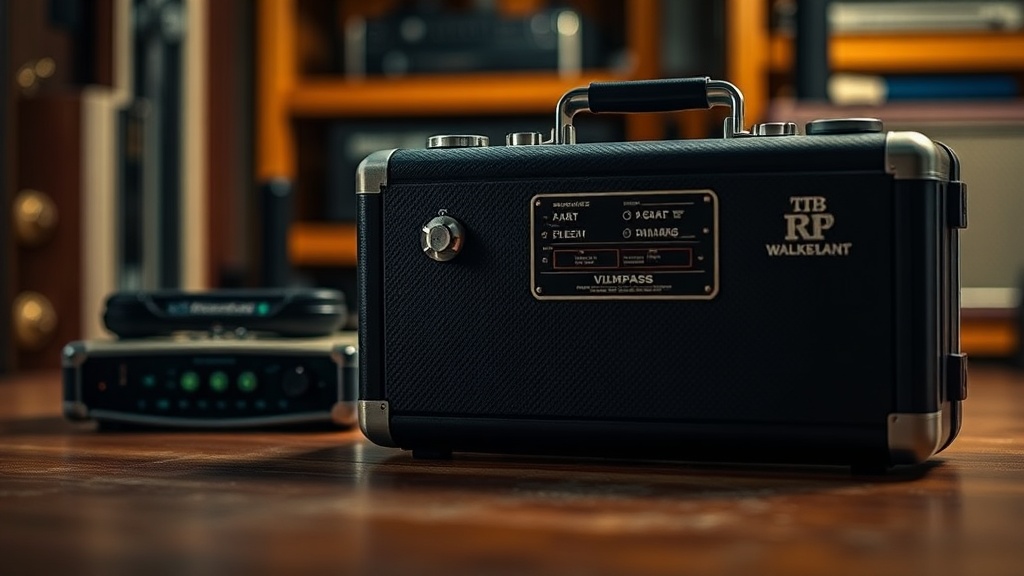
Selecting the Right Case for Your Vintage Walkman Collection

You just finished a long session listening to a high-end Sony WM-D6 Pro and you want to put it away, but your desk is a mess of loose cables and loose cassette tapes. You reach for a generic plastic bin, only to realize that a piece of heavy-duty hardware like that deserves more than a flimsy container. This post explains how to select the right storage solutions for your vintage Walkman collection, focusing on protection from dust, moisture, and physical impact.
A good case does more than just look nice on a shelf. It preserves the mechanical integrity of the device. If you own a high-end model—like the rare colorways of the Sony WM-D6 Pro—you know that even a small amount of grit in the headphone jack can ruin an afternoon. Protecting these investments requires a tiered approach to storage.
What is the Best Way to Store Vintage Walkmans?
The best way to store vintage Walkmans is in a hard-shell, padded case that prevents physical impact and keeps dust away from the mechanical buttons and ports. You want a container that offers a balance of rigidity and soft lining.
Hard cases are your best friend for travel. If you're moving your collection from one room to another, a hard case prevents the buttons from being pressed accidentally. This is a big deal because the mechanical feel of a vintage Sony or Aiwa unit is one of its best features. You don't want a crushed button or a stuck eject lever because your bag was too heavy.
For long-term storage, look for something with a non-acidic lining. Some cheap foam can actually off-gas over time, which isn't great for the plastics or the internal electronics. It's a subtle thing, but it matters. I've seen cases where the foam actually leaves a residue on the casing after a few years. That's a nightmare to clean off.
Here is a breakdown of the three main types of storage you'll encounter:
- Hard Shell Cases: Best for travel and heavy-duty protection. These usually feature EVA foam inserts molded to the shape of the device.
- Soft Pouches: Great for daily use or light-duty protection. Think of these as a "skin" for your device to prevent scratches.
- Display Cases: Designed for aesthetics. These are usually clear acrylic or glass boxes meant to show off the unit while keeping dust out.
How Much Does a High-Quality Protective Case Cost?
High-quality protective cases typically cost between $20 and $60 USD, depending on the size and the level of customization. While you can find cheap generic pouches for a few dollars, they rarely offer the protection a serious collector needs.
If you are looking for a specialized case for a single unit, you might find yourself looking at custom-molded EVA cases. These are often sold for camera lenses or high-end headphones. They are incredibly durable. However, they can be a bit more expensive. Don't be surprised if you see prices creeping up toward the $50 mark for a truly rugged option.
On the flip side, if you are building a large collection, buying individual cases is a waste of money. You're better off investing in a dedicated media storage system. This might mean a high-quality wooden box or a specialized electronics organizer. It's about the long game. You aren't just buying a box; you're buying a way to keep your gear functional for another twenty years.
A quick tip: Always check the dimensions of your Walkman before buying a case. A Walkman with an attached strap or a bulky battery pack might not fit in a standard "slim" case. I've made that mistake before. It's a frustrating way to spend $30.
Should I Use a Dedicated Case for My Cassette Tapes Too?
Yes, you should use dedicated storage for your tapes to prevent physical damage and magnetic degradation. While the Walkman is the star of the show, the tapes are the fuel. If the tapes are damaged, the playback experience is ruined.
Tapes are sensitive to temperature and humidity. If you leave them sitting out in the open, they collect dust. That dust gets into the playback head of your Walkman, which leads to high-frequency loss and static. It's a cycle of degradation that is hard to reverse.
Consider these storage options for your media:
- Plastic Bins: Good for bulk storage, but ensure they are airtight to keep moisture out.
- Wooden Boxes: These look great on a desk and feel more "premium," but they don't provide a moisture seal.
- Dedicated Media Drawers: These are often found in office-supply stores. They are excellent for keeping tapes upright and organized.
One thing to keep in mind: never store your tapes or your Walkmans in a basement or an attic. The temperature fluctuations in those areas are too extreme. High heat can warp the tape, and high humidity can cause the internal components of the Walkman to oxidize. If you want your gear to last, keep it in a climate-controlled environment. This is basic physics, but it's often overlooked by newer collectors.
If you're worried about the audio quality, remember that the physical state of your equipment is the foundation. If you've spent time finding high quality replacement headphone pads, you clearly care about the details. The same logic applies to how you store the machine itself. A clean, dust-free environment leads to a cleaner signal.
Comparing Storage Methods
| Storage Type | Protection Level | Best Use Case | Portability |
|---|---|---|---|
| EVA Hard Case | High | Travel & Transport | Excellent |
| Padded Pouch | Medium | Daily Use | Good |
| Acrylic Display | Low (Dust only) | Home Display | Poor |
| Plastic Bin | Low | Bulk Tape Storage | Moderate |
Choosing a case isn't just about the look. It's about the reality of how you use your gear. If you're a "grab and go" collector, you need a hard case that can withstand being tossed in a backpack. If you're a "desk collector" who mostly listens at home, a nice display case might be enough. Just don't assume a cheap bag is doing its job.
The real test of a case is when you inevitably drop it. A soft pouch won't do a thing for a drop, but a hard-shell case with proper foam density can save you from a very expensive repair or a total loss. It's a small investment for a massive amount of peace of mind. When you're dealing with vintage electronics, you're dealing with parts that aren't easily replaced. Treat them with the respect they deserve.