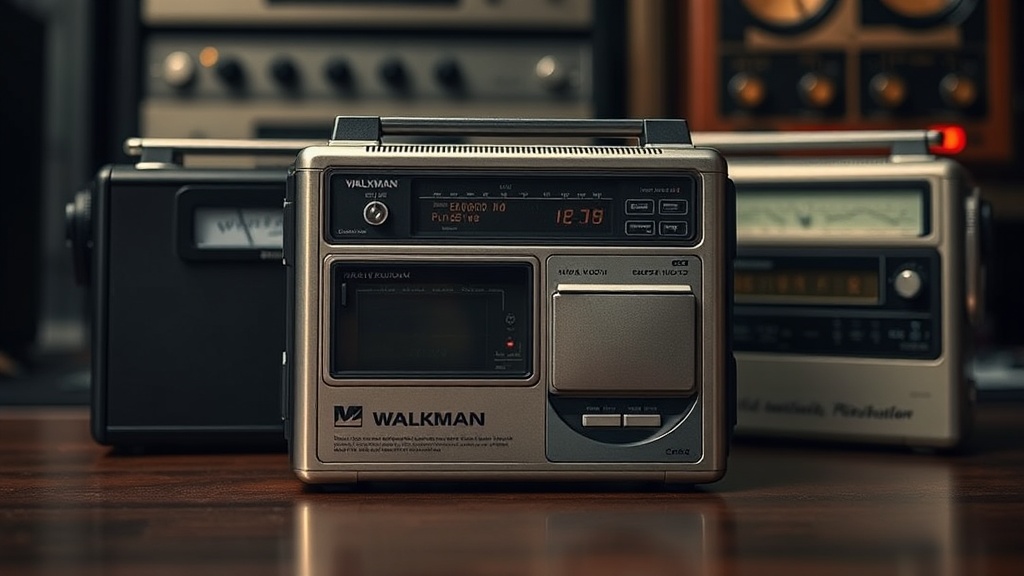
Vintage Walkman Models That Changed Music History

The Original TPS-L2: The Beginning
The WM-20: Slim and Sophisticated
The Sports Series: Durability Meets Sound
The Hi-Fi Revolution: Premium Audio Portability
What defines a truly iconic piece of audio technology? This post examines the specific Sony Walkman models that fundamentally shifted how humans consume music, moving the experience from the living room to the streets. We'll look at the engineering milestones, the design shifts, and the specific models that collectors now hunt for in the secondary market.
Which Walkman Model Started the Revolution?
The Sony TPS-L2 is the model that officially launched the portable audio era in 1979. While it wasn't the first portable cassette player, it was the first to make high-fidelity music truly mobile. It changed the social dynamic of music by allowing listeners to create a private sonic bubble in public spaces.
The TPS-L2 is the holy grail for many in our community. It features two headphone jacks—a detail many people forget—which allowed two people to listen together. It’s a heavy, metal-clad beast compared to the plastic-heavy-models we see today. If you find an original one in working condition, don't expect it to be easy on your battery life. It's a beast of a machine.
Looking at the history of the Walkman, you see a rapid evolution from these heavy metal units to the ultra-slim designs of the 90s. The TPS-L2 set the standard for what a "personal" device should feel like. It wasn't just a gadget; it was a cultural shift.
The Evolution of Portability
Following the initial success of the TPS-L2, Sony released several iterations that focused on shrinking the footprint. We saw a move from the "brick" style to the "pocket" style. This transition wasn't just about size—it was about the psychological freedom of being able to carry your music anywhere without a heavy bag.
- WM-2: A smaller, more streamlined version that proved people wanted even more portability.
- WM-D6C: The professional-grade "Pro" model that brought high-end fidelity to the mobile format.
- NW-series: The eventual transition into digital, though it lacks the tactile charm of the analog era.
Why is the Sony WM-D6C So Highly Regarded?
The Sony WM-D6C is a professional-grade cassette recorder that offers unparalleled audio fidelity for a portable device. It is often cited as the pinnacle of the analog portable era because it uses high-quality components usually reserved for stationary decks. It’s a heavy, rugged piece of gear that collectors prize for its sheer build quality.
The internal components are much more substantial than your standard consumer-grade Walkman. It uses a high-quality motor and a sophisticated head assembly. If you are a purist, this is the machine that proves portable doesn't have to mean "low quality." It’s a heavy-duty tool for those who take their tape playback seriously.
Collectors often spend a lot of time finding high quality replacement headphone pads to ensure these premium machines are paired with decent audio-delivery systems. A high-end recorder like the D6C deserves more than a cheap, generic pair of headphones.
It’s worth noting that the D6C is a beast to maintain. Finding parts for these professional-grade machines is a different beast entirely compared to the standard consumer models. You'll need a steady hand and a lot of patience.
How Much Do Vintage Walkmans Cost Today?
The price of a vintage Walkman depends heavily on its model, its physical condition, and whether it is actually functional. A common mistake is buying a "mint looking" unit that has a dead motor or a seized belt system. A beautiful exterior means nothing if the tape won't even spin.
| Model Category | Typical Price Range (USD) | Collector Value Factor |
|---|---|---|
| Early Metal Models (TPS-L2) | $300 - $800+ | Originality and box presence |
| High-End Pro (WM-D6C) | $400 - $1,200 | Mechanical functionality |
| Standard Consumer (WM-FX) | $30 - $75 | Cosmetic condition |
| Slim/Digital Era (NW series) | $50 - $150 | Battery health/Screen clarity |
The market is volatile. A working, serviced unit will always command a premium over a "parts only" unit. I've seen people pay hundreds more for a unit that has been professionally refurbished versus one that has been sitting in a damp basement for twenty years. Don't get fooled by a shiny shell.
What to Look for When Buying
If you're looking to add a piece of history to your collection, you need to be discerning. Don't just look at the photos. Look at the specs. Is it a high-bias machine? Does it have the specialized heads for Chrome or Metal tapes? These details matter for the actual listening experience.
- Check the belt status: Most vintage rubber parts perish over time.
- Inspect the headphone jack: Oxidation here is a common issue that ruins the audio experience.
- Verify the motor speed: A slow motor makes everything sound like it's underwater.
- Look at the battery compartment: Acid leakage from old batteries is a death sentence for these devices.
Which Models Defined the "Golden Era"?
The "Golden Era" of the Walkman was roughly the mid-80s to the early 90s, a period where Sony mastered the balance between miniaturization and high-fidelity playback. During this time, the technology moved from being a novelty to a standard piece of consumer electronics.
The WM-F10 and WM-F1 are great examples of the "Radio-Walkman" hybrid. These were larger, but they allowed for a much more robust signal reception. They were popular among people who wanted to listen to the radio while walking or traveling. They were a bit bulky—almost like carrying a small radio on your belt—but the utility was undeniable.
Then you have the highly sought-after "Sports" models. These were built with a rugged, water-resistant casing. They were designed for an active lifestyle, which was a relatively new concept for high-end audio at the time. They're built like tanks. If you want something that can survive a bit of a beating, these are the ones to watch.
The transition to digital was inevitable, but the analog models of this era remain the most interesting to collect. There's a tactile nature to a cassette player—the click of the play button, the mechanical whir of the motor—that a digital file simply can't replicate. It's a physical connection to the music.
The collectors' market for these items is driven by two things: nostalgia and the desire for a specific sound. The way a high-end analog player handles a tape is fundamentally different from a digital player. It's a different texture of sound. It's warmer, sometimes a bit more "alive" in a way that digital often struggles to mimic.
When you're browsing auctions, remember that "vintage" doesn't always mean "good." A lot of what's out there is junk that's been poorly maintained. If you want a piece that actually sounds good, you'll have to do your homework. It's a hobby that rewards the diligent researcher.