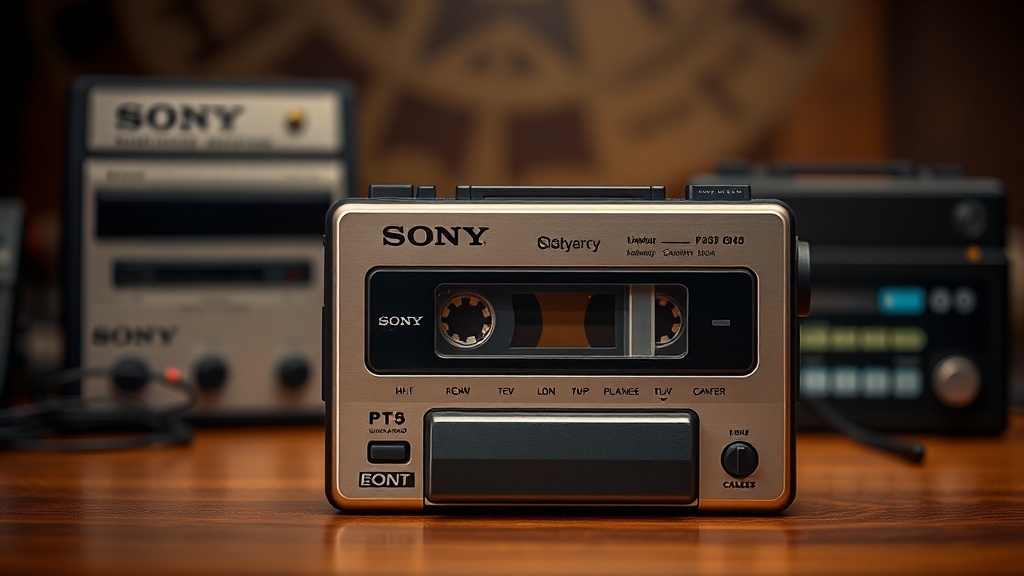
key Guide to Buying Vintage Sony Walkman Cassette Players

This guide covers everything needed to identify, evaluate, and purchase vintage Sony Walkman cassette players with confidence. Whether hunting for a daily driver or a pristine collector's piece, you'll learn which models matter, what defects to watch for, and how much to pay—so you don't get burned by a "tested and working" listing that's anything but.
What Should You Look for When Buying a Vintage Walkman?
The three non-negotiables are: clean battery contacts, functioning belts, and stable playback speed. Everything else—cosmetic wear, missing battery covers, even cosmetic scratches—can be addressed later. The mechanical guts are what separate a $50 parts unit from a $300 daily listener.
Start with the battery compartment. Corrosion around the contacts kills more Walkmans than any other issue. Green crust, white powder, or rust staining usually means the previous owner left batteries in for years. Sometimes it's fixable with vinegar and elbow grease. Sometimes the corrosion has eaten through traces on the circuit board. Pop the battery cover and look—don't trust seller photos.
The drive belts are next. These rubber bands connect the motor to the capstan and flywheel. After 30–40 years, they've turned to goo or snapped entirely. A player that "powers on but doesn't play tapes" almost always needs new belts. Replacement isn't rocket science (YouTube has tutorials), but factor belt kits into your budget—usually $10–$20 from suppliers like SynnHira or eBay sellers specializing in vintage audio.
Playback speed issues—often called "wow and flutter"—are harder to fix. Listen for voices that sound like chipmunks or molasses. Speed problems indicate motor degradation or dried lubricant. Some units have adjustable trim pots; others don't. Here's the thing: unless you're handy with a soldering iron, walk away from speed issues.
Which Sony Walkman Models Are Worth Buying in 2024?
Not all Walkmans are created equal. Sony produced hundreds of models across four decades, and some have aged far better than others. The sweet spot for collectors and users alike sits between 1984 and 1995—post-mechanism refinement but pre-cost-cutting plastic era.
| Model | Year | Why It Matters | Typical Price (Working) |
|---|---|---|---|
| WM-D6C | 1984–2002 | Professional recording deck, metal tape support, exceptional build | $400–$800 |
| WM-EX60 | 1987 | Full logic controls, remote compatibility, slim profile | $150–$300 |
| WM-FX290 | 1995 | Radio/cassette combo, affordable entry point, decent reliability | $40–$80 |
| WM-EX674 | 1999 | One of the last great Japanese-made units, gumstick battery | $120–$200 |
| WM-DD9 | 1988 | Quartz-locked direct drive, flagship status, repairable | $600–$1,200 |
The WM-D6C deserves special mention. It's not a pocket player—more a portable studio deck—but it's built like a tank and sounds phenomenal. If serious tape collecting is the goal, this is the machine. That said, prices have gone insane lately. Five years ago, $200 bought a clean unit. Today? Good luck finding one under $500.
For everyday listening, the EX series (WM-EX60 through WM-EX999) hits the right balance. They're slim, run on single AA or gumstick batteries, and Sony manufactured millions—so parts and donor units remain available. The catch? Early EX models suffer from "Sony grease syndrome"—sticky, degraded lubricant that seizes buttons and mechanisms. It cleans up with isopropyl alcohol, but it's tedious work.
Avoid the ultra-cheap late-90s Sports models unless you're beach-bound. The WM-FS399 and similar lack Dolby NR, have muddy playback circuits, and feel like hollow toys. Fine for nostalgia—frustrating for actual listening.
Where's the Best Place to Buy Vintage Walkman Players?
eBay remains the largest marketplace, but it's a minefield. Keywords matter. Search "Sony Walkman" and you'll drown in overpriced junk. Try "vintage cassette player," "Sony portable tape deck," or specific model numbers like "WM-EX621" instead. Worth noting: sellers who post photos of the battery compartment, the headphone jack, and the tape head are usually honest. One blurry exterior shot? Red flag.
Japanese Yahoo Auctions (via proxy services like ZenMarket or Buyee) offers better condition units at lower prices—if patience isn't an issue. Shipping adds $20–$40, and you'll wait weeks. But Japanese sellers grade honestly, pack meticulously, and often include original boxes and manuals. For high-end models like the WM-DD9 or WM-D6C, buying from Japan frequently saves money even after fees.
Local thrift stores, estate sales, and Facebook Marketplace occasionally yield gold. The best finds happen where sellers don't know what they have. A "radio tape player" listing at $15 beats a "RARE VINTAGE WALKMAN!!!" at $300 every time. Check Value Village, Salvation Army, and independent charity shops in older neighborhoods. Fredericton's own uptown thrift circuit has produced some gems—though competition has heated up since 2020.
Specialized forums like Reddit's r/cassetteculture have "for sale" threads with knowledgeable sellers. The community polices itself—scammers don't last. Prices trend fair, not inflated, because most members are enthusiasts, not flippers.
Red Flags in Online Listings
Learn to read between the lines. "Powers on" means nothing—a Walkman can light up and still eat tapes. "Untested" usually means "I know it's broken." "As-is" definitely means broken. "No returns" screams hidden problems.
Ask specific questions before bidding:
- Does the tape counter move smoothly?
- Any warbling or speed variation when playing?
- Do the rewind and fast-forward functions engage?
- Is the headphone jack clean or corroded?
- Has it been opened or serviced?
Sellers who know their stuff answer promptly. Silent treatment? Move on. There will always be another Walkman.
How Much Should You Pay for a Vintage Walkman?
Prices have doubled since 2020. Thanks to TikTok nostalgia and cassette revival culture, what was $30 is now $80. Here's what reasonable pricing looks like in today's market:
Common models (WM-FX290, WM-AF22, basic Sports series) should run $30–$70 working. Mid-tier EX models fetch $80–$200 depending on condition and included accessories. Premium units—WM-DD series, WM-D6C, special editions—command $300+ and climb fast. Sealed, boxed examples have sold for thousands, though that's speculation territory, not utility.
Factor in restoration costs. A "bargain" $40 Walkman needing belts ($15), a new idler tire ($10), and head cleaning ($5 in supplies) becomes a $70 investment. Plus labor—your time counts. Sometimes paying $120 for a serviced, working unit beats gambling on a fixer-upper.
Batteries deserve mention too. Vintage gumstick batteries (NP-11A, etc.) are landfill now. Modern equivalents exist on Amazon, but quality varies wildly. Stick to brands like Eneloop Pro or reputable third-party manufacturers. Avoid no-name cells—they leak, swell, and damage irreplaceable battery compartments.
Headphones and Accessories
The original MDR-series headphones included with premium Walkmans are collectors' items themselves. The MDR-W08 vertical in-ear design, the MDR-4L1S clip-ons—both command $50+ alone. Most buyers focus on the player and ignore these, which is fine. Any decent portable headphones work, though period-correct pairs complete the aesthetic.
"The best Walkman is the one you'll actually use. A pristine collector's piece that stays in a drawer serves nobody. Buy the beat-up WM-EX60, throw in fresh belts, and take it on the train. That's what Sony built them for." — Anders Fraser, Walkman Collectors
Cassette storage matters too. Those 1980s "walkman cases" with foam inserts? The foam degrades into sticky orange dust that coats everything. Replace with microfiber pouches or hard-shell cases designed for electronics. Keep silica gel packets handy—humidity kills circuit boards.
Maintenance is simple but ongoing. Clean the tape head with isopropyl alcohol every few months. Demagnetize occasionally (yes, it actually helps). Store with the tape compartment open to prevent mold. Treat a Walkman well and it'll outlast whatever streaming service is hot this week.
Final thought: the hunt is half the fun. Scrolling listings at midnight, spotting an underpriced WM-EX808, negotiating with a seller in Osaka—that's the collector experience. The other half? Popping in a Maxell XLII-S, pressing play, and remembering why analog audio still matters.