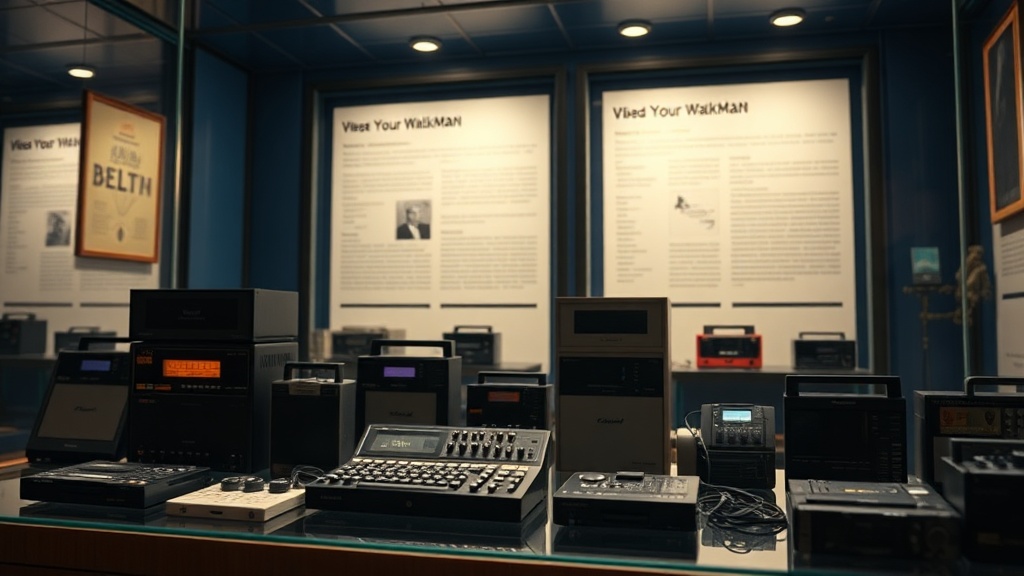
How to Properly Display Your Walkman Collection Like a Museum Curator

What's the Best Way to Display Walkman Players Without Damaging Them?
The best way to display Walkman players is to keep them out of direct sunlight, away from heat sources, and in a low-humidity environment—preferably in UV-protected display cases with individual compartments that prevent metal-on-metal contact. Your collection represents years of hunting, bargaining, and genuine appreciation for portable audio history. A poorly displayed collection doesn't just look amateur—it actively degrades the very hardware you've worked hard to preserve. This post covers everything from basic shelf arrangements to professional museum-grade techniques, lighting choices, dust protection, and the psychology of visual storytelling.
Here's the thing: most collectors start by cramming units onto whatever shelf space is available. It's functional. It's also doing a disservice to the engineering and design work Sony, Aiwa, Panasonic, and others poured into these devices. Display isn't vanity—it's preservation with benefits.
What Kind of Shelving Works Best for Walkman Collections?
Adjustable metal shelving with glass or acrylic fronts works best for Walkman collections because it accommodates varying unit depths while offering clear visibility and dust protection. The ideal shelf depth is 12-14 inches—deep enough for boxed units but shallow enough that devices don't disappear into shadowy backgrounds.
IKEA's BILLY bookcase series remains a popular starting point for budget-conscious collectors. Add the OXBERG glass doors and you've got a $150 solution that beats open-air storage. That said, the 11-inch depth is tight for some boxed Sony Professional units. The FJÄLLBO series offers that industrial aesthetic many collectors prefer, with wider spacing between shelves.
For serious collectors, consider the Gladiator GarageWorks modular system. It's overbuilt for garage tools—which means it'll handle 200+ Walkmans without sagging. The powder-coated finish resists the oils that inevitably transfer from handling vintage electronics.
Worth noting: wood shelving looks warmer but can off-gas acids over decades. If you're displaying original cardboard boxes (like the WM-D6C Professional cases), seal wood shelves with polyurethane first. Your 1980s packaging will thank you.
Spacing and Arrangement Principles
Museum curators use the "three-foot rule"—viewers should be able to appreciate any individual piece from three feet away without visual interference from neighbors. Apply this to Walkman displays by leaving at least one inch between units, more for bulkier models like the WM-EX909 or any unit with an attached speaker dock.
Arrange by era, by brand, or by color. Don't mix methods on the same shelf—that creates visual chaos. Sony's 1979-1989 "golden era" units share design DNA and look cohesive together. Post-1990 Discman-era Walkmans tell a different story and deserve their own zone.
The catch? Chronological arrangement exposes the decline in build quality. Your 1979 TPS-L2 sits next to 1995's plasticky WM-FX290, and the contrast is brutal. Some collectors prefer grouping by aesthetic—brushed metal units together, sports models (the "W" series) in another zone, ultra-rare collectibles under separate lighting.
How Do You Protect Walkmans from Light and Dust Damage?
UV-filtering acrylic cases (not glass—glass blocks less UV and shatters) combined with LED lighting set to 2700-3000K color temperature offer the best protection against the yellowing, fading, and brittleness that destroy vintage plastics. Direct sunlight will turn your pristine WalkmanProfessional's silver trim brown within five years.
Acrylic display cases from Better Display Cases run $40-80 per unit and include built-in stands. For collections exceeding fifty units, bulk acrylic fabrication from a local supplier often costs less per case than retail. Specify cast acrylic—not extruded, which scratches easily and yellows faster.
Dust is the silent killer. Foam-lined carrying cases (the original Sony CCP-10, for instance) trap moisture and promote battery corrosion. Display cases need ventilation—small holes every few inches, covered with breathable fabric mesh that blocks dust while allowing air exchange. Silica gel packets (the indicating type that turns pink when saturated) should be replaced quarterly.
Humidity control matters enormously. Walkmans contain ferrous metal springs, screws, and battery contacts. At 60% relative humidity, rust begins forming invisibly. Aim for 45-50% RH. The Eva-dry E-333 renewable dehumidifier ($15) handles enclosed cabinet spaces without the waste of disposable desiccants.
Lighting That Shows Without Showing Off
Strip LED lighting from Philips Hue or Govee works well for adjustable color temperature. Avoid spotlights—they create harsh reflections on plastic and metal surfaces. Diffuse lighting from above and slightly in front eliminates glare while highlighting the machining details that make vintage Walkmans special.
The Sony WM-DD9's copper flywheel, visible through the cassette window, deserves to be seen. So does the brushed aluminum of the WM-EX1. Poor lighting hides these details; good lighting reveals why engineers poured craftsmanship into devices most consumers treated as disposable.
Should You Display Walkmans With or Without Their Original Packaging?
Display decisions depend on rarity and condition—common models (WM-FX101, WM-EX112) look better out of packaging where industrial design is visible, while rare or sealed units should remain boxed to preserve provenance and value. Original packaging for 1980s Walkmans was often as thoughtfully designed as the players themselves.
The Sony "Professional" series boxes featured distinctive black and gold design language. Displaying a WM-D6C in its original packaging communicates seriousness—it says this isn't just an old radio, it's a tool used by journalists and musicians worldwide. The box becomes part of the artifact.
That said, sealed units are fetish objects, not functional collectibles. If you own a sealed WM-EX1 HG (the 10th anniversary model), you're curating an investment, not sharing audio history. Most collectors find a balance: one shelf for boxed rarities, another for "player grade" units that visitors can handle and appreciate up close.
| Display Method | Best For | Cost Estimate | Pros | Cons |
|---|---|---|---|---|
| Open shelving (IKEA BILLY) | Budget collections, frequently used units | $50-100 per case | Affordable, accessible | Dust accumulation, UV exposure |
| Glass-front cabinets | Mid-range collections, mixed display | $150-400 per cabinet | Dust protection, visibility | Reflections, humidity trapping |
| Individual acrylic cases | High-value units, rarities | $40-80 per case | UV protection, stackable | Expensive at scale, less cohesive look |
| Custom built-in cabinetry | Serious collectors, permanent installations | $2000+ | Integrated lighting, climate control | Fixed layout, significant investment |
| Shadow box framing | Single showcase pieces, wall display | $30-60 per frame | Artistic presentation, protection | Static display, difficult access |
How Can You Tell the Story Behind Each Walkman in Your Display?
Effective Walkman displays include provenance cards—small labels indicating model, year, country of manufacture, and one interesting detail that invites closer inspection. Museums call this "interpretive text," and it's what separates a hoard from a curated collection.
Don't write essays. "WM-D6C (1984) / Made in Japan / Used by BBC correspondents in Falklands War coverage" says enough. The visitor who cares will ask questions. The visitor who doesn't isn't slowed down by walls of text.
Consider QR codes linking to Walkman Archive entries or your own catalog photos. Modern collectors maintain digital provenance—repair records, purchase history, previous owners. A small sticker on the case bottom (archival-safe, of course) can reference this database without cluttering the visual presentation.
Grouping creates narrative. Place the original 1979 TPS-L2 near its 1986 descendant, the WM-101—the world's thinnest Walkman at release. The progression tells Sony's engineering story without words. Similarly, the "Sports" line (WM-F5, WM-35, WM-F75) shows how portable audio moved from commuter trains to jogging paths.
The Handling Question
Some collectors maintain "look but don't touch" policies. Others keep a few "beaters"—player-grade units that visitors can actually operate. There's value in letting someone experience the mechanical clunk of a Walkman door closing, the resistance of a well-maintained volume wheel, the faint click of the AMS (Automatic Music Sensor) seeking the next track.
Establish protocols. Cotton gloves (the lint-free kind used by photo archivists, not the cheap poly-cotton blend) prevent oil transfer. Handle units by edges, never by the cassette door. If someone wants to hear a unit, you insert the cassette—you don't hand over a $400 vintage player to butterfingers.
The Fredericton collection scene (yes, there's a scene) tends toward accessibility. At the annual Fredericton Collector's Expo, Walkman enthusiasts demo restored units with period-appropriate cassettes—Dire Straits on a WM-41, Run-DMC on a WM-F107. The sound quality surprises first-timers who've only known Bluetooth.
Climate Control for Serious Collections
Basements are terrible for Walkmans—humidity swings, flooding risk, poor air circulation. Attics are worse—temperature extremes that warp plastics and degrade capacitors. The ideal storage environment mirrors what museums use for photographic collections: 65-70°F, 45% relative humidity, minimal light, stable conditions year-round.
If your collection exceeds 100 units, invest in monitoring. SensorPush wireless sensors ($50) track temperature and humidity via smartphone app, alerting you to dangerous conditions. Place sensors at different heights—heat rises, and the top shelf of a display case can be 10 degrees warmer than the bottom.
Air circulation prevents stagnant pockets where mold develops. Small computer fans (Noctua NF-A4x20, whisper-quiet at $15) mounted in cabinet backs create gentle airflow without vibration. Vibration is the enemy—it loosens solder joints over years of exposure.
Insurance and Documentation
Your homeowner's policy probably caps electronics coverage at $1,500—nowhere near replacement cost for a serious Walkman collection. Document everything with high-resolution photos, serial numbers, and current market valuations from sold eBay listings. CollectInsure and similar specialty insurers understand vintage electronics and offer agreed-value policies.
Store documentation offsite. Cloud storage is obvious, but a physical binder at a family member's house protects against digital disasters. Include purchase receipts, repair records, and correspondence with previous owners. Provenance adds value—and helps recovery if the worst happens.
A well-displayed Walkman collection isn't just eye candy. It's a preservation project, a historical document, and—if done right—a source of genuine joy every time you walk past. The units you spent years tracking down deserve better than a cardboard box in the closet. Give them light, give them space, give them respect. They earned it.
Steps
- 1
Choose the Right Display Location and Environment
- 2
Arrange Your Walkmans by Era, Color, or Model Series
- 3
Add Proper Lighting and Protective Elements