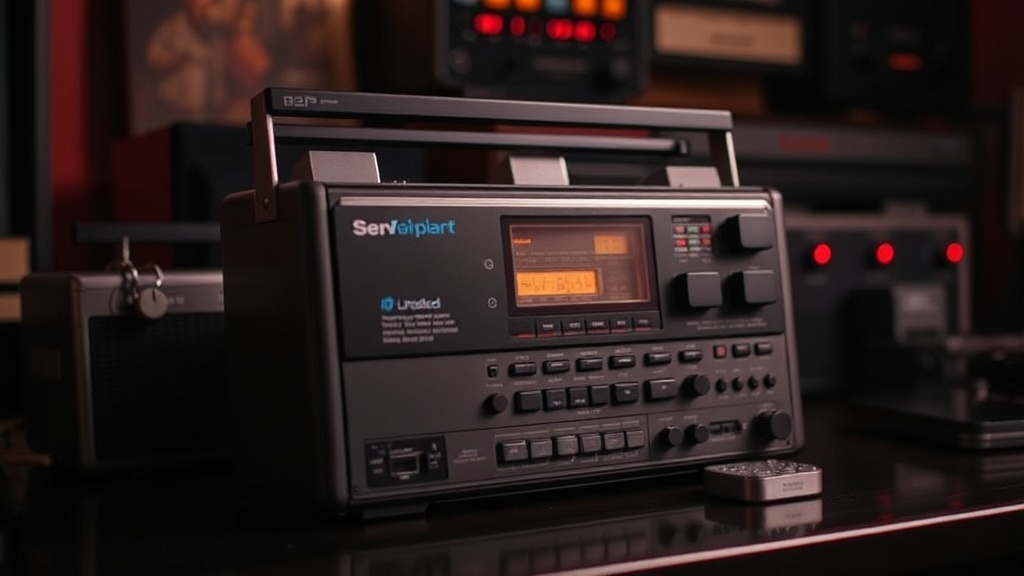
5 Legendary Walkman Models Every Serious Collector Needs

Sony TPS-L2: The Original Game-Changer
WM-D6C: The Professional Recording Beast
WM-DD9: The Ultra-Rare Direct Drive Marvel
WM-EX1: The Sleek Executive Statement Piece
WM-701S: The Slimline Engineering Triumph
This guide covers five Walkman models that define any serious collection — units that consistently appreciate in value, attract bidding wars on eBay, and spark conversations at swap meets. Whether you're starting out or refining a decades-old collection, these are the portables that matter.
What Was the First Walkman Ever Released?
The Sony TPS-L2 debuted in Japan on July 1, 1979 — the device that started it all. Sony co-founder Masaru Ibuka wanted a portable way to listen to opera during trans-Pacific flights. The result? A blue-and-silver stereo cassette player weighing 14 ounces that cost ¥33,000 (roughly $150 USD at the time).
The TPS-L2 featured something no other portable had: two headphone jacks. Sony called it the "Guys & Dolls" feature — a clunky name, sure, but the functionality mattered. You could share music with a friend on the bus, on a park bench, anywhere. The unit also included a "hotline" button that lowered playback volume and activated a microphone so you could talk without removing your headphones.
Build quality on these early units is astonishing. The TPS-L2 used metal gears, brass flywheels, and a direct-drive motor system that outlasted most competitors by decades. The blue paint (Sony called it "International Blue") chips easily — a detail that separates honest wear from abuse.
Here's the thing: finding a working TPS-L2 in original condition demands patience and serious cash. Clean units regularly sell for $800–$1,500 on eBay. Rebuilt models from specialists like Sony's archival documentation fetch even more. The TPS-L2 isn't just a Walkman — it's the Walkman that created the category.
Which Walkman Model Sounds the Best?
The Sony WM-D6C delivers the finest audio quality of any portable cassette device ever manufactured. Originally released in 1984 as a more affordable version of the professional WM-D6, this "Professional Walkman" targeted journalists, musicians, and field recordists who needed Nagra-quality sound without the bulk or price tag.
Inside the WM-D6C sits a three-head system — erase, record, and playback heads separated rather than combined. This arrangement allows true tape monitoring while recording, plus alignment adjustments that consumer units simply don't offer. The deck supports all four tape formulations: normal (Type I), chrome (Type II), ferrichrome, and metal (Type IV). That flexibility matters. Metal-position recordings on a properly calibrated WM-D6C rival reel-to-reel quality.
Dolby B and C noise reduction come standard. The unit runs on four AA batteries for roughly six hours of recording, or via an external DC adapter. The transport mechanism uses a direct-drive capstan motor with servo-controlled speed — wow and flutter measure below 0.08%, better than many home decks.
The catch? Sony manufactured the WM-D6C until 2002, but early units (1984–1989) command premium prices. These "Made in Japan" versions feature superior build quality, metal chassis components, and the sought-after "Dolby HX Pro" badge. Later "Made in Malaysia" units work fine but feel lighter, cheaper. Early serial numbers starting with 2xxxxx or 3xxxxx — those are the ones to hunt.
Expect to pay $400–$800 for a clean WM-D6C needing minor work. Fully serviced units from specialists like Walkman Archive regularly exceed $1,200. Worth noting: the playback-only sibling, the WM-D6, lacks recording capability but offers identical sound quality for slightly less money.
What Is the Most Collectible Walkman Ever Made?
The Sony WM-EX1 holds that crown — a titanium-clad flagship released in 1994 as part of Sony's 15th-anniversary celebration. Designed by Masaru Ibuka's original engineering team (now retired but consulting), the EX1 represented everything Sony learned about portable audio across fifteen years of iteration.
The chassis uses actual titanium — not coated aluminum, not plastic with metallic paint. This material choice keeps weight at 145 grams despite the premium feel. The EX1 introduced Sony's "Disc Drive" mechanism, a direct-drive system eliminating the rubber belt that plagued every other Walkman. Belts rot. They stretch. They turn to goo in humid climates. The EX1 doesn't have one.
Audio performance is reference-grade. The EX1 supports Dolby B and C, features Sony's "Mega Bass" sound enhancement (actually useful here, unlike cheaper implementations), and delivers frequency response of 20Hz–20kHz ±3dB with metal tapes. The "EX" in the name stands for "Excellent," apparently. Marketing fluff — but the hardware backs it up.
Sony produced the WM-EX1 in extremely limited quantities. Estimates suggest fewer than 50,000 units across all markets. Most sold in Japan; European and North American distribution was minimal. Today, working EX1s in good cosmetic condition routinely sell for $1,500–$3,000. Boxed, mint examples? North of $5,000 at specialized auctions.
That said, the EX1 isn't practical for daily use. The rubber rollers still deteriorate (just not the belt), and replacement parts are essentially unavailable. Most serious collectors keep an EX1 as a display piece while using lesser units for actual cassette listening.
The Collector's Hierarchy: Five Models Compared
| Model | Year | Key Feature | Current Value (USD) | Rarity |
|---|---|---|---|---|
| TPS-L2 | 1979 | Original Walkman, dual headphone jacks | $800–$1,500 | Scarce |
| WM-D6C | 1984–2002 | Professional 3-head recording | $400–$1,200 | Moderate |
| WM-EX1 | 1994 | Titanium body, beltless drive | $1,500–$5,000 | Very Rare |
| WM-F5 | 1983 | First waterproof/sports model | $200–$600 | Uncommon |
| WM-DD9 | 1988 | Quartz-locked direct drive | $800–$2,000 | Rare |
What Was the First Sports Walkman?
The Sony WM-F5 arrived in 1983 as the first truly waterproof portable cassette player. Yellow. Chunky. Sealed against water, dust, and the general abuse that destroys lesser electronics. The WM-F5 targeted runners, swimmers, and anyone who wanted music during messy outdoor activities.
The waterproofing actually worked — sort of. Sony rated the WM-F5 for "splash resistance" rather than submersion. The sealed battery compartment, rubber-gasketed headphone jack, and ultrasonic-welded case seams kept rain and sweat out. Many survived accidental pool drops. The bright yellow color (later joined by red and black variants) made the unit easy to spot in gym bags or on trails.
Sonic performance took a back seat to durability. The WM-F5 uses a simpler motor system than contemporary models, with slightly higher wow and flutter figures. The included MDR-W30 headphones (yellow, naturally) sound mediocre by any standard — but they stayed on your head during vigorous movement, which was the point.
Collectors value the WM-F5 for its historical significance and rugged good looks. Clean units with intact seals and original headphones command $400+. The similar WM-F35 (released 1984) added AM/FM radio but lost the pure cassette-focused charm. Most enthusiasts prefer the original F5.
Is There a Walkman That Never Needs a Belt Replacement?
The Sony WM-DD9 answers yes — a 1988 flagship featuring quartz-locked direct drive without any rubber belt in the transport path. This engineering choice eliminates the single most common failure point in cassette equipment. Decades later, DD9s often work perfectly while belt-drive contemporaries sit dead in drawers.
The "DD" stands for "Disc Drive," Sony's branding for direct-drive Walkman mechanisms. The DD9 represents the pinnacle of this technology. A quartz-locked servo motor maintains absolute speed accuracy — no drift, no wow, no flutter audible to human ears. The mechanism detects tape tension in real time and adjusts torque accordingly. This sophistication shows in the sound: the DD9 rivals many home cassette decks for pure fidelity.
Build quality matches the engineering. The DD9 uses a copper-plated chassis for electromagnetic shielding, ceramic tape guides that never wear out, and a magnesium alloy case that feels like quality in your hand. Sony offered the DD9 in champagne gold and black finishes. The gold variant — more common — still looks striking. The black version, produced in smaller numbers, carries a slight price premium.
Power comes from a single AA battery delivering roughly 10 hours of playback. An optional "BP-200" battery case extends this to 20 hours using a second cell. The DD9 supports Dolby B and C noise reduction, offers switchable "Mega Bass," and includes a recording function (unusual for a premium playback-focused unit).
Finding a DD9 requires diligence. Most survivors need new capacitors in the motor control circuit — a straightforward repair for experienced technicians, but not a beginner project. Budget $800–$1,500 for a working example. Pristine units with original packaging and accessories occasionally surface at Japanese auction houses, fetching $2,000+.
Where to Find These Classics
Fredericton's vintage electronics scene won't help much — the city's too small. Most collectors hunt online. Yahoo Auctions Japan (via proxy services like Buyee or ZenMarket) consistently offers the best selection and pricing, though shipping and import duties add complexity. eBay works for convenience but demands careful seller vetting. Watch for "parts or repair" listings — sometimes a $50 gamble yields treasure, sometimes expensive frustration.
Local thrift stores, estate sales, and flea markets occasionally produce miracles. The trick? Visiting consistently and knowing exactly what you're looking for. That yellow Sony sports model buried under VHS tapes might be a $400 WM-F5. The beat-up silver box with missing battery cover? Potentially a TPS-L2 someone inherited and doesn't recognize.
Repair skills matter. Belt replacement, capacitor swaps, head alignment — these tasks separate working collections from display-only shelf queens. The r/cassetteculture community maintains excellent repair guides. Specialist services exist for those without soldering irons or patience, though turnaround times stretch months and costs add up fast.
"The best Walkman is the one that works when you want to hear a tape. Everything else — rarity, value, provenance — is secondary." — Collecting wisdom from the Walkman Archive forums
Start with the TPS-L2 if budget allows. It's the original, the icon, the one that appears in films and museum exhibits. The WM-D6C suits listeners who care about sound quality above all else. The WM-EX1 appeals to those who appreciate engineering excellence and don't mind keeping a valuable object pristine. The WM-F5 and WM-DD9 round out any serious collection — one representing outdoor durability, the other mechanical perfection.
Happy hunting. May your belts stay supple and your heads stay aligned.